
Capydata: Designing a Data Marketplace on Sui
Data markets need ownership, pricing, access control, quality signals, and settlement rails before data becomes a usable Web3 asset class.
Publication
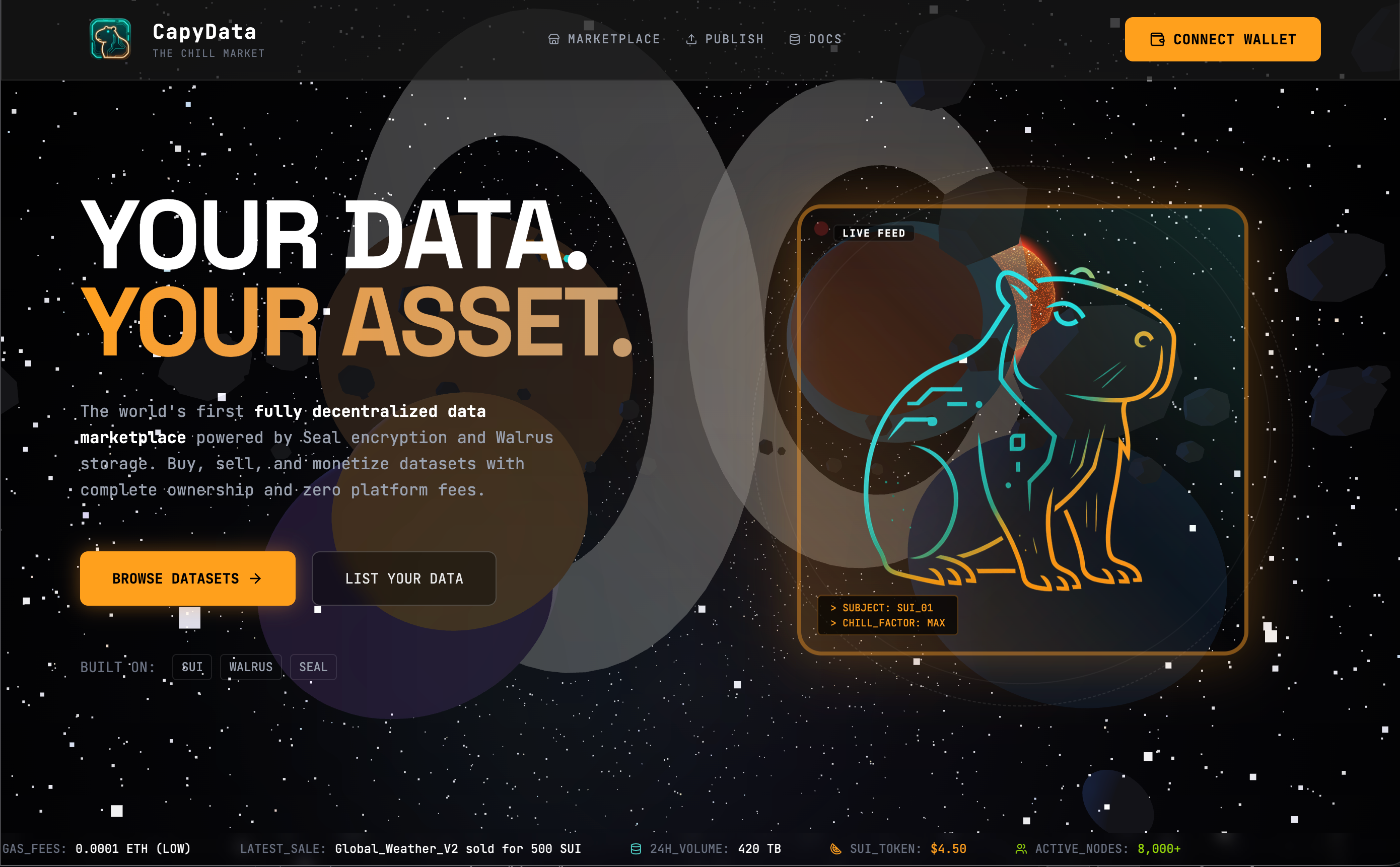
Data is becoming one of the most important inputs for AI, trading, research, and consumer products. Yet most data markets still have weak ownership models, opaque pricing, poor provenance, and limited tools for access control. Capydata explores a simple but difficult idea: data should be easier to own, package, price, and exchange.
The choice of Sui is meaningful for this kind of product. Sui’s object-centric model encourages builders to think about digital assets as explicit, composable objects rather than only balances in an account. For a data marketplace, that maps naturally to datasets, licenses, access passes, reputation objects, and purchase receipts.
A useful data marketplace needs more than upload and download. It needs trust signals. Buyers need to know what a dataset contains, how fresh it is, how it was produced, what rights they receive, and whether the provider has delivered quality before. Sellers need pricing tools, distribution channels, and protection against uncontrolled redistribution. The marketplace itself needs discovery, metadata standards, settlement, and dispute handling.
Capydata’s product surface is therefore not only about monetization. It is about making data legible. A buyer should be able to inspect previews, understand constraints, and purchase access without private negotiation. A seller should be able to list a dataset once, define permissions, and receive payment through transparent rails. Over time, richer reputation and verification layers can turn the market from a file directory into an economy of reusable data assets.
This matters beyond data alone. AI agents need reliable data feeds. Prediction markets need structured resolution information. DeFi products need analytics and risk signals. Research teams need reusable datasets. A data marketplace can become connective tissue across the rest of the Morca stack if it prioritizes quality, provenance, and usability from the beginning.
The hard part is not proving that data has value. The hard part is designing a product where value can be discovered, trusted, and exchanged repeatedly. Capydata is a step toward that system.